
High-Luminosity LHC Upgrade: Inside the Long Shutdown 3

Cite this article
Quantum Nature Science Desk (2026). High-Luminosity LHC Upgrade: Inside the Long Shutdown 3. Quantum Nature. https://quantum-nature.com/lhc-long-shutdown-3/
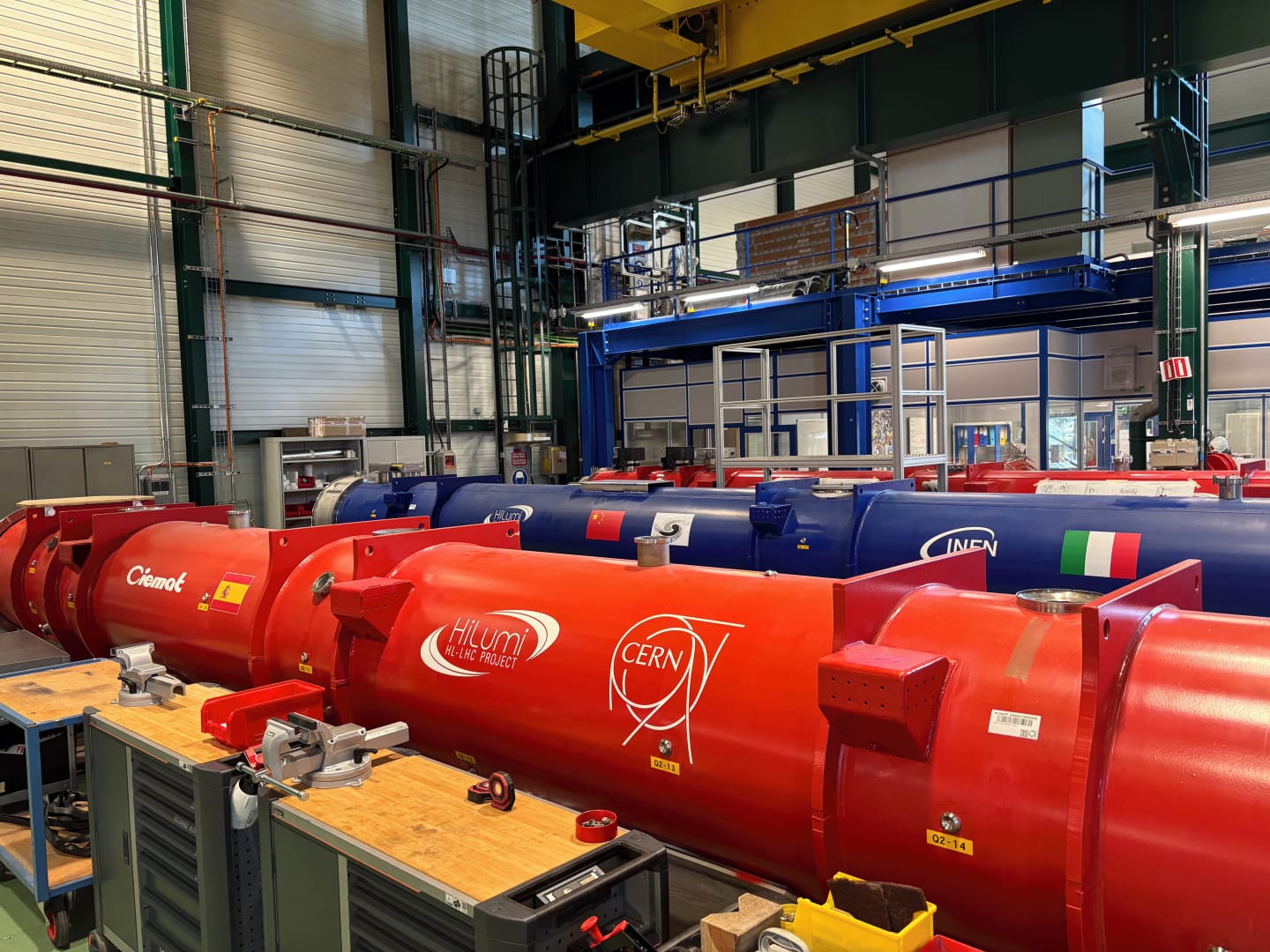
As of late June 2026, the world’s most powerful particle accelerator has officially bid farewell to collisions. The High-Luminosity LHC upgrade (HL-LHC) marks a pivotal four-year transformation. Consequently, this project will evolve the machine for the next decade of particle physics. This transition is not just a routine maintenance break; it is an ambitious architectural overhaul. Furthermore, it will define the future of how we understand the fundamental laws of our universe. You can read more about the technical specifications of the project at the official CERN website.
Objectives of the High-Luminosity LHC upgrade
The HL-LHC project aims to maximize discovery potential. Luminosity is a critical performance metric for any accelerator. Essentially, it measures the number of potential collisions occurring per surface unit over time.
The project has three primary goals:
- A Ten-Fold Increase: The project aims to increase the LHC’s integrated luminosity by a factor of 10 compared to its original design.
- Statistical Power: By producing more data, physicists can observe rare processes that are currently invisible to us.
- The Higgs Factory: The HL-LHC will produce roughly 380 million Higgs bosons over its lifetime. In comparison, the original LHC era produced only 55 million.
The Transformation: What Changes?
CERN is currently undertaking one of the most complex engineering campaigns in its history. The team will replace approximately 1.2 kilometers of the LHC’s 27-kilometer tunnel with entirely new, innovative technology.
Key technological features include:
- Advanced Focusing: New, more powerful magnets will squeeze the particle beams into a tighter focus at the collision points.
- Crab Cavities: Engineers will install innovative superconducting cavities, known as “crab cavities,” to tilt the particle bunches. This optimizes their overlap during collisions.
- Superconducting Power Lines: New superconducting electrical transmission lines will link equipment in specially constructed technical galleries to the magnets in the tunnel.
- Detector Upgrades: The ATLAS and CMS experiments are undergoing massive renewals. Additionally, CERN is replacing their trigger systems and electronic components entirely. This allows the system to handle the increased “pile-up”—where 140 to 200 proton-proton collisions occur every time the bunches cross.
Timeline: The Road to 2030
The shutdown is a massive logistical operation involving thousands of experts, engineers, and physicists.
- Now (2026): The LHC has entered LS3, and the team has begun dismantling the old infrastructure.
- The Interim Years: Experts will dedicate the next four years to installing new magnets, cryogenics, and detector systems.
- Mid-2030: The accelerator complex will restart. Thus, it will inaugurate “Run 4” and the official launch of the High-Luminosity era.
What do you think?
The LHC has already reshaped our understanding of the universe. With the HL-LHC set to provide a 10x increase in data, we are entering an era of unprecedented statistical precision. Are you more excited for the potential to find “New Physics” beyond the Standard Model, or the chance to study the Higgs boson in such granular detail? Let me know in the comments.
Responses